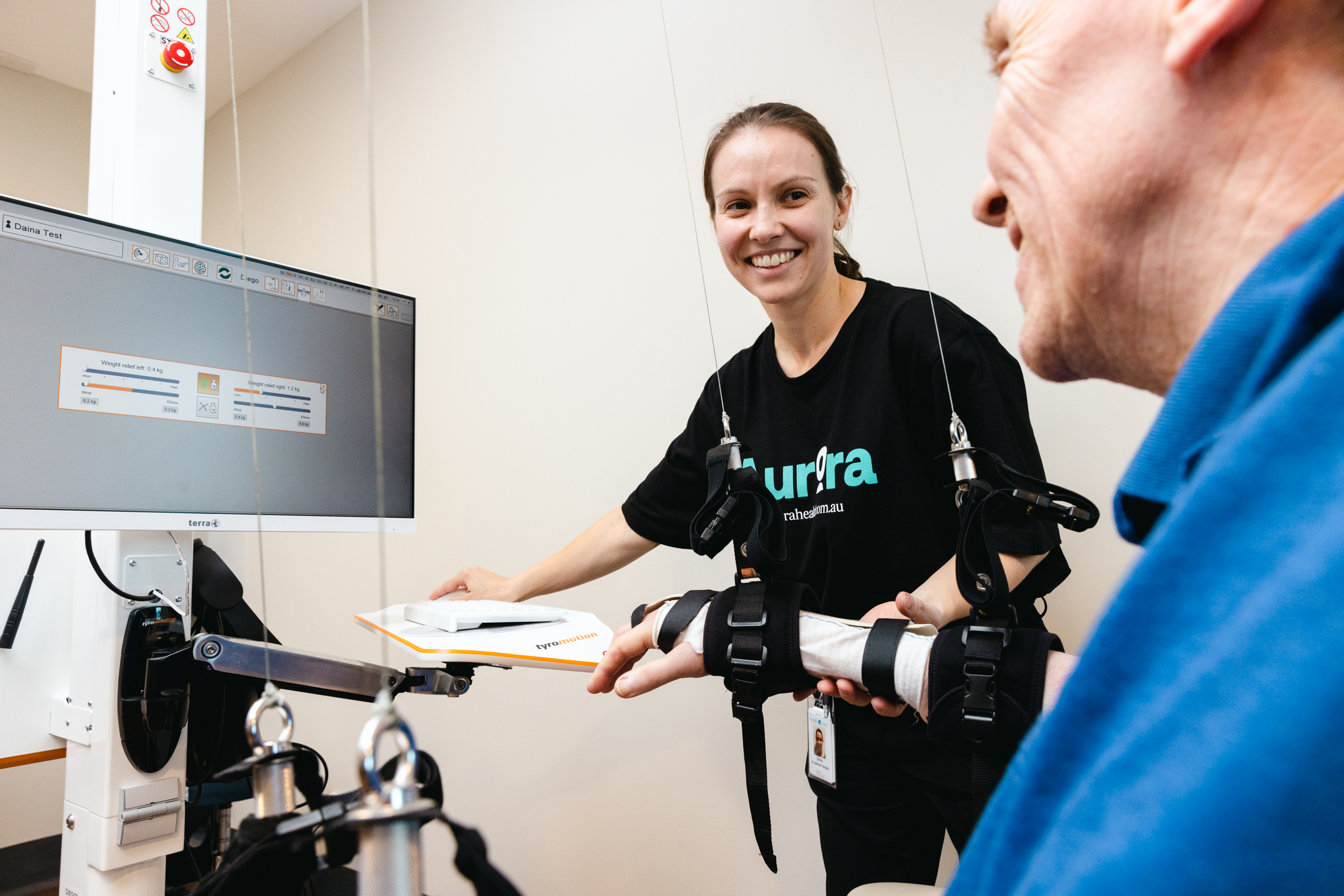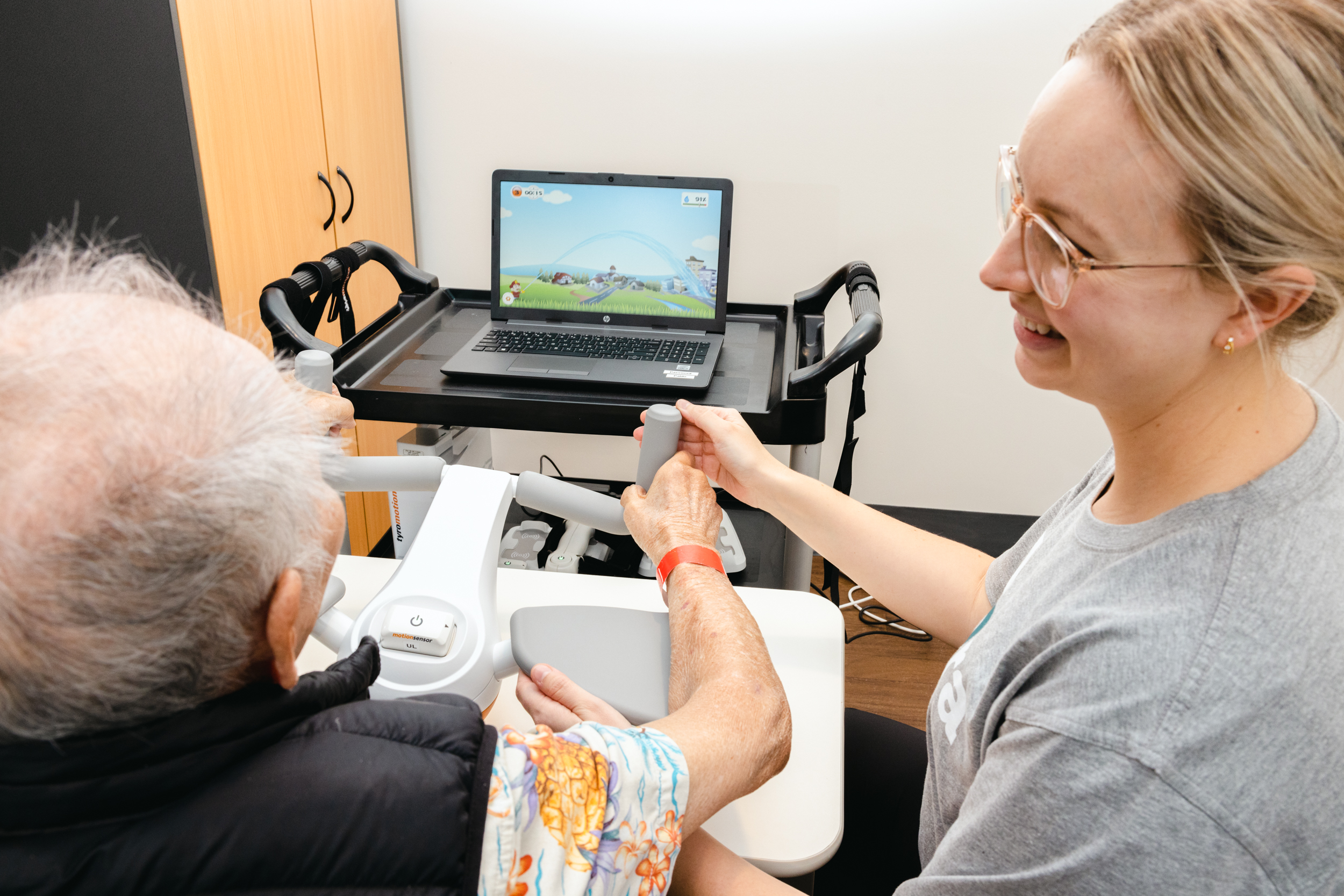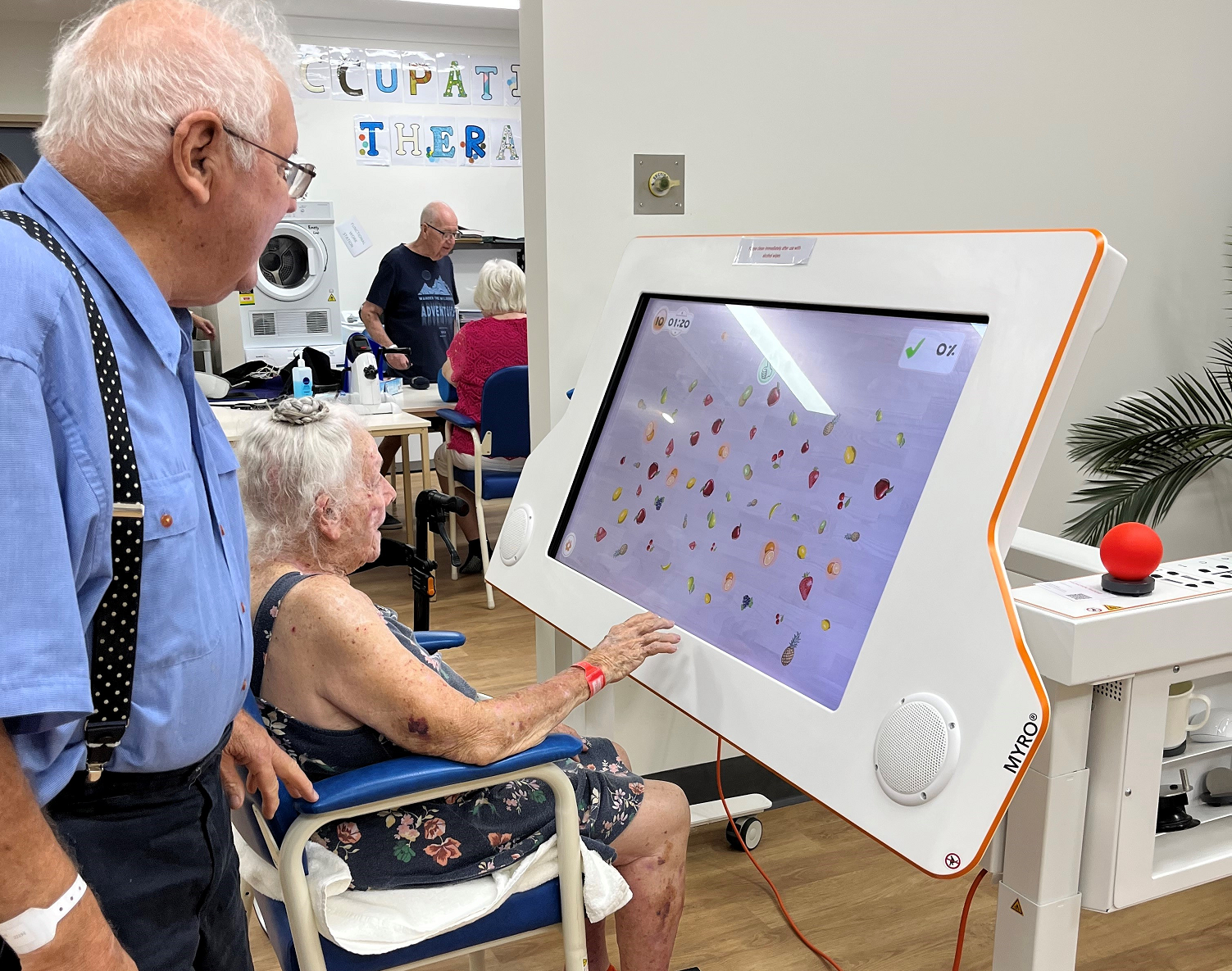
Robotic Assisted Therapy
Highly intensive, highly focused and motivating robotic-assisted rehabilitation for neurological patients in upper and lower extremity therapy.
An Investment in Innovation and Patient Recovery
Following a successful trial, Aurora Healthcare hospitals have embraced the future of rehabilitation by investing in state‑of‑the‑art robotic and computer‑assisted therapy devices. This strategic investment not only strengthens our clinical capabilities but also delivers measurable benefits for patients seeking faster, more effective recovery.
Our evidence‑based robotic‑assisted therapy enhances conventional rehabilitation by dramatically increasing the number of repetitions during treatment. This intensity drives neuroplasticity, helping patients achieve greater functional gains, improved mobility, and long‑term independence. By combining advanced technology with expert care, Aurora Healthcare is redefining rehabilitation outcomes for conditions such as stroke, spinal cord injury, Parkinson’s disease, Multiple Sclerosis, and musculoskeletal disorders.
Where is Robotic Assisted Therapy Available?
Robotic assisted therapy is available at the following hospitals. These facilities provide comprehensive rehabilitation programs for insured, uninsured, and NDIS-funded patients, ensuring accessibility for all who need advanced recovery solutions.
Aurora Healthcare offers robotic-assisted rehabilitation at:
WESTMEAD REHABILITATION HOSPITAL
Frequently Asked Questions
What is robotic-assisted therapy / robotic rehabilitation?
Robotic Assisted Therapy is an advanced rehabilitation program that uses robotics, computer-assisted devices, and gamified technology to help patients recover faster and more effectively. By increasing the number of repetitions during therapy, this innovative approach promotes neuroplasticity, enabling the brain and body to relearn movement patterns.
Aurora Healthcare’s robotic therapy supports recovery for stroke, spinal cord injury, Parkinson’s disease, Multiple Sclerosis, traumatic brain injury, and musculoskeletal conditions.
Who does robotic-assisted rehabilitation help?
Unlike traditional rehabilitation, robotic-assisted therapy provides intensive, repetitive, and targeted exercises that improve upper and lower limb function, balance, gait, and cognition. Patients receive real-time feedback through interactive devices, making therapy more engaging and motivating. The combination of robotics and gamification ensures patients stay committed to their rehabilitation journey while achieving measurable outcomes.
Robotic assisted therapy focuses on the following:
- Finger and hand therapy
- Cognition and visual scanning
- Balance
- Gait analysis
- Upper limb and lower limb function
Robotic-assisted rehabilitation helps therapists and patients to do the right things at the right time, regardless of location, indication and phase of rehabilitation.
The benefits of robotic assisted therapy
Patients using robotic-assisted therapy have seen improvement in patient functional deficit resulting from stroke, traumatic brain injury, MS, Parkinsons and, musculoskeletal and spinal conditions.
There are numerous benefits to utilising robotic-assisted therapy in your road to rehabilitation:
- Accelerated recovery: More repetitions lead to faster neurological improvements.
- Motivating technology: Gamified exercises keep patients engaged and positive.
- Personalised rehabilitation: Tailored programs for neurological and musculoskeletal conditions.
- Evidence-based outcomes: Proven to enhance mobility, strength, and independence.
- Accessible care: Available for inpatients, day patients, outpatients, and NDIS participants.
Who Can Access Robotic Assisted Therapy?
Robotic-assisted therapy is available to:
- Inpatients recovering from acute illness or injury
- Day patients attending structured rehabilitation programs
- Outpatients seeking ongoing therapy support
- NDIS participants and those with other funding schemes
Aurora Healthcare ensures that every patient has access to state-of-the-art rehabilitation technology designed to maximise independence and quality of life.
How to add robotic-assisted therapy to your rehabilitation
Ask your general practitioner or specialist to refer you to one our hospitals near you that offers our Robotic Assisted Therapy Program.
Aurora Robotic Assisted Rehabilitation in the News
Discover how Aurora Healthcare’s robotic-assisted rehabilitation therapy is making headlines across Australia — transforming patient recovery and showcasing the future of evidence-based rehabilitation.
Toronto Private Hospital
Toronto Private Hospital has been recognised for pioneering robotic-assisted therapy in the Hunter region, with local media highlighting how advanced rehabilitation robots are helping patients regain mobility and independence faster than ever before.
HUNTER FIRST TRIAL | REHAB ROBOTS FAST-TRACK PATIENT RECOVERY – NBN NEWS
Eden Private Hospital
Eden Private Hospital’s innovative program has captured national attention, with ABC News reporting on how robotic devices and virtual-reality technology are revolutionising stroke rehabilitation and improving patient outcomes.